Category: Scraping
Why One Scraper Isn't Enough: Anti-Bot, Proxies and Multi-Engine Data Collection
Why isn’t one scraper enough? How Senkrondata combines static and browser-based engines, proxy rotation and health checks to collect at scale.
"Scraping a price off a web page" looks simple at first: download the page, parse the HTML, grab the number. For a few products on one site, that's true. But the moment you try to reliably collect millions of products from hundreds of sites, every day, you learn why a single method collapses.
The problem isn't technical, it's adversarial: modern sites don't want to be scraped and actively defend against it. So a resilient data-collection infrastructure isn't a single "scraper" — it's an orchestration of several complementary engines and techniques.
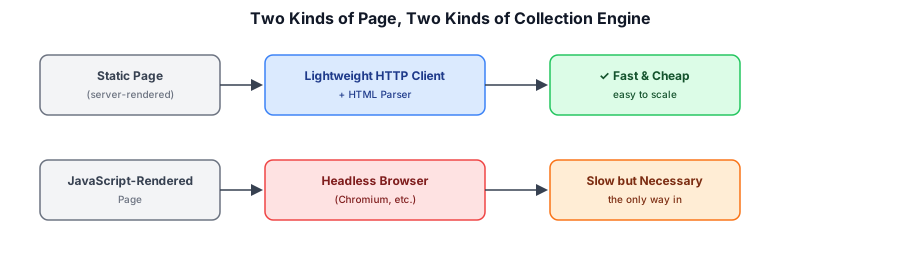
Two kinds of page, two kinds of engine
There are two different worlds on the web:
- Static / server-rendered pages: the price is right there in the HTML the server returns. Collecting these with a lightweight request + parse approach (a classic HTTP client + HTML parser) is most efficient. It's cheap to scale.
- JavaScript-rendered pages: the price is loaded by JavaScript running in the browser after the page opens. To see it, you have to run a real browser engine (headless Chromium, say), wait for the page to load, and sometimes even mimic interactions like clicks and scrolls.
Forcing a single approach onto every site loses both ways: running a browser engine on a static page is needlessly expensive; running a lightweight client on a JS page fetches empty HTML. That's why in Senkrondata's infrastructure, crawlers use different engines (from a lightweight request to a full browser) depending on the nature of the target site.
Why you get blocked: anti-bot defenses
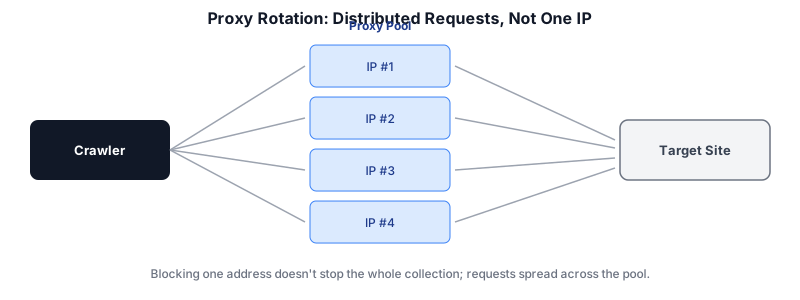
Sites use multi-layered defenses to tell automated traffic from human traffic: per-IP rate limits, blocking bursts from the same address, browser fingerprint checks, behavioral analysis, CAPTCHAs. A naive scraper gives itself away instantly — requesting from the same IP, in the same pattern, at superhuman speed — and gets blocked.
Resilience comes from behaving in a respectful and distributed way toward these defenses:
- Proxy rotation: spreading requests over a pool instead of a single IP both reduces hitting rate limits and prevents one address's block from halting the entire collection.
- Human-like behavior: putting reasonable waits between requests, using realistic browser headers, moving at a pace that won't overwhelm the site.
- Graceful failure: falling back to an alternate engine/route when one gets blocked — and, above all, noticing the failure instead of swallowing it silently.
Collecting isn't enough — you have to verify
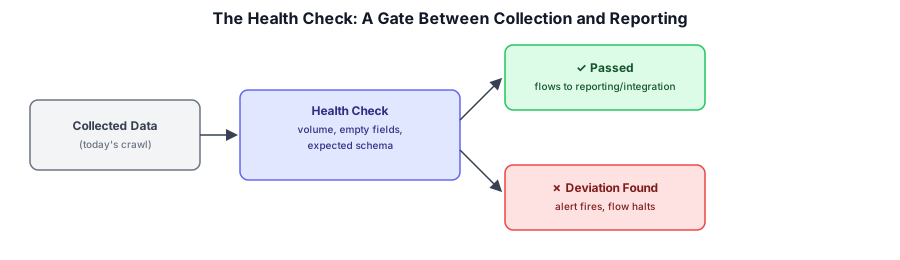
A crawler saying "it worked" doesn't mean the data came back correct. When a site changes its design, a scraper can start collecting empty or wrong data without throwing an error — and that silent breakage is the most dangerous kind of failure. So above the collection layer there must be a health check: did today's data arrive, is its volume reasonable, are the expected fields populated? If there's an unexpected deviation, an alert fires before any report is produced.
The principles that keep it trustworthy
- The right engine for the right site. One size doesn't fit all; engine choice follows the nature of the target.
- Distribute, slow down, be respectful. Sustainable collection is collection that doesn't overwhelm the site; aggressiveness buys speed short-term and a permanent block long-term.
- Catch silent breakage. "No error" and "data is correct" are not the same thing; the output of collection is always verified.
The bottom line
Reliable price data comes not from a single clever scraper but from the orchestration of different engines, a proxy strategy, and health checks. "Scraping a price off one page" is easy; scraping it from hundreds of sites, every day, without getting blocked and without breaking silently, is an engineering discipline.
If you need resilient, verified competitor data at scale, talk to the Senkrondata team.
Emre
Price Intelligence & Data Engineering
Emre writes about the machinery behind competitor price data: product matching, normalization, collection at scale and the analytics layer on top.
More from EmreContact Us
Leave your email address for a detailed demo or overview session, and we will get back to you shortly.